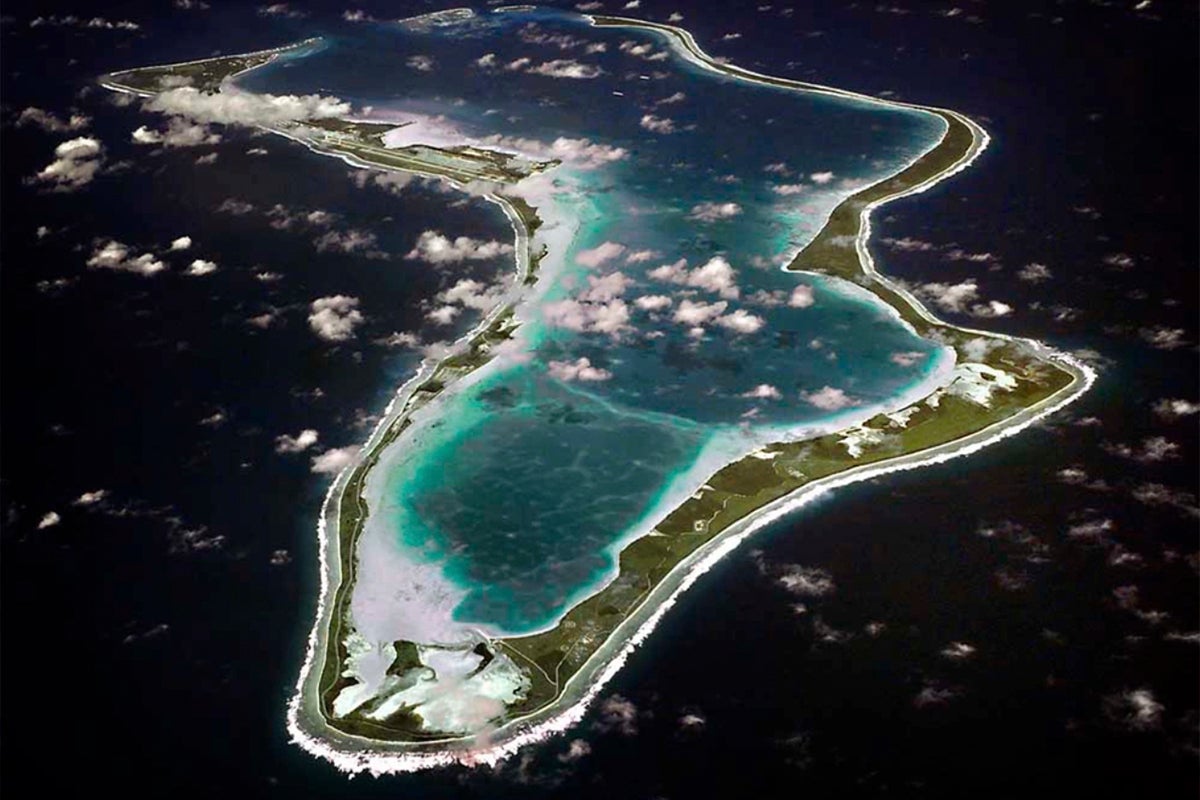
Chagos Islands Deal Delayed: Trump's Influence and UK Setback
The intricate world of international diplomacy rarely faces such dramatic shifts as the recent saga surrounding the Chagos Islands deal. What began as a seemingly ironclad agreement, backed by both the UK and US, has been thrown into disarray, largely due to the unexpected and forceful intervention of former President Donald Trump. His dramatic U-turn on the proposed sovereignty transfer to Mauritius has not only caused a significant setback for the UK government but has also reignited debates about geopolitical strategy, international law, and the enduring influence of key political figures.
The proposed deal, spearheaded by Sir Keir Starmer's government, aimed to resolve a long-standing dispute over the British Indian Ocean Territory (BIOT) by ceding sovereignty to Mauritius. Crucially, the plan included a lease-back arrangement for the vital Diego Garcia military base, ensuring its continued operation by the UK and US. This base, a cornerstone of Western military operations in the Indian Ocean, was central to the agreement's viability. However, the path to ratification has become increasingly fraught, demonstrating how a single voice can reverberate across global alliances.
The Sudden U-Turn: Why Donald Trump Opposes Chagos Deal
For months, the Chagos Islands deal appeared to have solid bipartisan support, even garnering an initial nod from Donald Trump himself. During a visit to the White House, he reportedly told Sir Keir Starmer he was "inclined to go with your country" and had "a feeling it’s going to work out very well." This early endorsement provided significant momentum for the UK's diplomatic efforts. Yet, in a stunning reversal, Trump's stance dramatically shifted. He began publicly denouncing the agreement, at one point branding it an act of "great stupidity" and later, "total weakness."
Understanding why Donald Trump opposes Chagos Deal requires looking beyond surface-level politics. His initial support, perhaps based on a more general briefing, seemed to align with maintaining a strong Anglo-American alliance. However, as further details emerged and external influences came into play, his perspective evidently changed. Trump's "America First" ideology often prioritizes perceived direct national interest and a strong negotiating position, and perhaps the deal, in its current form, began to look like a concession rather than an advantage. His pronouncements, ranging from "very disappointing" regarding Britain's foreign policy to declaring Starmer "not Winston Churchill," reveal a deep dissatisfaction that extended beyond the specifics of the Chagos agreement itself. This shift left the UK government scrambling, as the formal US approval, once seemingly guaranteed, became uncertain.
Nigel Farage's Influence and the "Surrender" Narrative
A significant catalyst for Trump's change of heart appears to be the persistent and vocal opposition from figures like Nigel Farage. The Reform UK leader has long been a staunch critic of the Chagos deal, controversially labeling it a "surrender" treaty and "the worst deal in history." Farage's close relationship with Donald Trump, dating back years, provided a direct conduit for his message. He explicitly stated his intention to discuss the deal at Mar-a-Lago, confident in his ability to "reinforce the message" to the former President.
Farage's argument centered on the idea that ceding sovereignty of the British Indian Ocean Territory was an "absolute betrayal" of national interest and a strategic blunder. He argued that the deal undermined the UK's global standing and its control over a crucial military asset, regardless of the lease-back clause. His rhetoric resonated with Trump's own penchant for strong nationalist positions and skepticism towards international agreements that could be perceived as weakening a nation's position. This strategic lobbying effort highlights a critical aspect of modern geopolitics: the power of informal channels and personal relationships to influence even the most significant foreign policy decisions. For a deeper dive into this dynamic, read: Nigel Farage's Push: How Trump's Opposition Derailed Chagos Deal.
UK's Dilemma and International Repercussions
The UK government now finds itself in a precarious position. Despite earlier insistence that discussions were continuing and the deal was "necessary to secure the future of the crucial UK-US Diego Garcia military base," the official line has shifted. The deal has been effectively "shelved," with officials citing a lack of time to pass legislation before Parliament is prorogued. A new Chagos bill is not expected in the King's Speech, signaling a significant pause, if not an outright abandonment, of the current agreement. This turn of events represents a substantial setback for Starmer's foreign policy agenda and underscores the fragility of international agreements when faced with powerful external opposition.
The immediate repercussions are multifaceted. For Mauritius, the delay is a source of profound frustration. The Mauritian Prime Minister, Navin Ramgoolam, has indicated that his country is "exploring legal avenues" against the UK over the delay in ratifying the deal. While the UK government believes there are no grounds in international law for Mauritius to obtain compensation if the treaty is not ratified, the prospect of legal challenges adds another layer of complexity to an already delicate situation. Furthermore, the proposed financial commitment from the UK – at least £120 million annually during the 99-year agreement, totaling an estimated £35 billion – remains in limbo, raising questions about future financial obligations and potential liabilities. For more context on the deal's suspension, see: Trump's U-Turn Halts Chagos Deal: UK Shelves Sovereignty Plan.
Looking Ahead: The Future of Chagos and UK Diplomacy
The delay in the Chagos Islands deal forces a critical re-evaluation for all parties involved. For the UK, it means a potential return to the drawing board on how to resolve the sovereignty dispute while safeguarding the strategic importance of Diego Garcia. The base is an irreplaceable asset for projecting power and maintaining security in a volatile region, crucial for counter-terrorism efforts, maritime surveillance, and logistical support for global operations. Any future agreement will undoubtedly need to ensure unwavering US backing from the outset, a lesson perhaps painfully learned from this episode.
For Mauritius, the path forward involves weighing legal action against continued diplomatic engagement. The historical claim to the Chagos Islands is deeply ingrained, and international pressure has been mounting on the UK to resolve the issue. However, the reality of the geopolitical landscape, particularly the enduring power of the US-UK special relationship and the strategic imperative of Diego Garcia, cannot be ignored.
Key Takeaways:
- Geopolitical Sensitivity: The Chagos Islands case exemplifies the complex interplay of historical claims, strategic military interests, and shifting political alliances.
- The Power of Personal Influence: Donald Trump's intervention, reportedly spurred by figures like Nigel Farage, highlights how influential individuals can significantly alter the course of international agreements.
- Strategic Imperative of Diego Garcia: The military base remains a critical asset for both the UK and the US, complicating any permanent resolution to the sovereignty dispute.
- Diplomatic Challenges: The UK now faces the challenge of placating Mauritius while navigating the unpredictable landscape of US politics, especially with a potential Trump return to the White House.
The Chagos Islands deal serves as a stark reminder that even well-intentioned and seemingly beneficial international agreements can be derailed by unexpected political headwinds. The influence of Donald Trump opposes Chagos Deal has undeniably created a significant diplomatic headache for the UK, leaving the future of the islands, and indeed the future of a key UK-US military partnership, in an uncertain state.