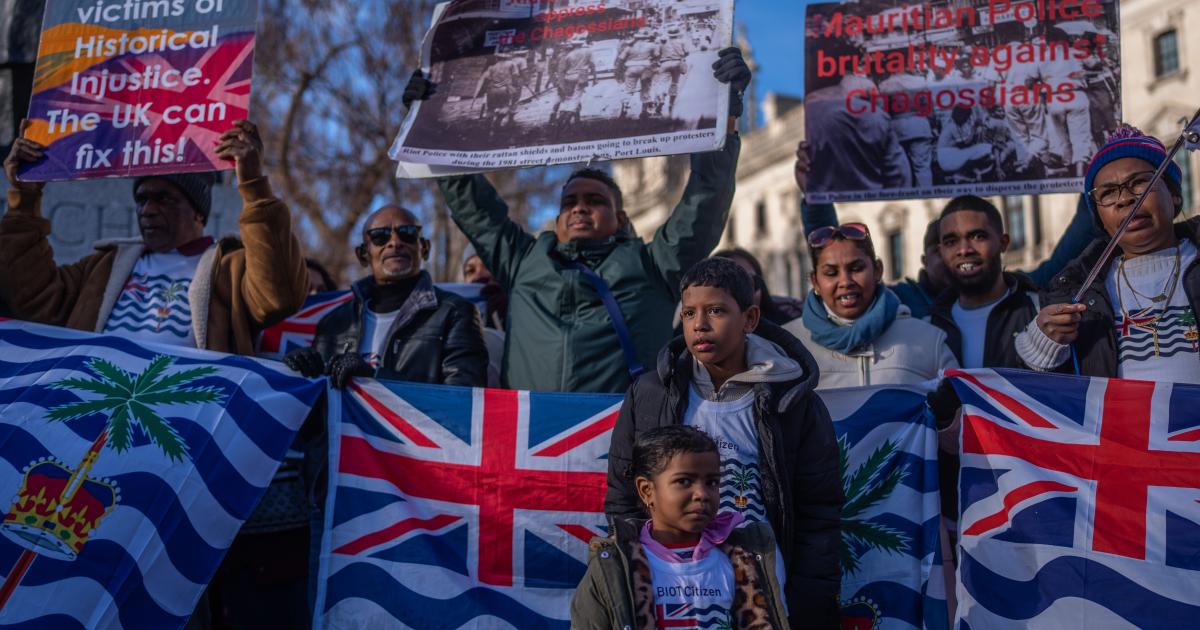
Trump's U-Turn Halts Chagos Deal: UK Shelves Sovereignty Plan Amidst Political Storm
A seismic shift in international diplomacy has seen the United Kingdom abruptly shelve its long-negotiated deal to transfer sovereignty of the Chagos Islands to Mauritius. The dramatic reversal comes directly on the heels of intense opposition from former US President Donald Trump, who initially supported the agreement but later denounced it as an "act of great stupidity." This unexpected intervention, heavily influenced by figures like Nigel Farage, has thrown the future of the strategically vital Diego Garcia military base into uncertainty and sparked a diplomatic firestorm.
The proposed deal, a cornerstone of Sir Keir Starmer's foreign policy, aimed to resolve a decades-old colonial dispute by ceding sovereignty to Mauritius while securing a crucial 99-year lease for the UK-US military facility on Diego Garcia. However, with the looming prorogation of Parliament and a clear lack of formal US approval following Trump's public dissent, the UK government has confirmed it will not proceed with legislation in the immediate future, leaving the agreement in limbo and casting a long shadow over UK-US relations.
The Chagos Islands Deal: A Geopolitical Tightrope Walk
For years, the Chagos Islands, a British Indian Ocean Territory, have been at the heart of a complex geopolitical and historical dispute. The UK acquired the archipelago in the 19th century, but Mauritius has long claimed sovereignty, a position supported by international rulings. The most sensitive aspect of this dispute revolves around Diego Garcia, the largest island, which hosts a critical joint UK-US military base. This facility is an indispensable strategic asset, playing a vital role in operations across the Indian Ocean, the Middle East, and beyond, crucial for surveillance, logistics, and counter-terrorism efforts.
The deal, championed by Sir Keir Starmer's government, sought to navigate this delicate balance. It proposed ceding sovereignty of the entire Chagos Archipelago to Mauritius, a move intended to settle the historical claim and align with international legal opinions. In return, the UK would secure a new, long-term lease – reportedly 99 years – for the Diego Garcia base, ensuring its continued operation under joint UK-US control. Furthermore, the agreement included a significant financial component, with the UK committing to annual payments of at least £120 million to Mauritius, totalling an estimated £35 billion over the lease period, a sum intended to compensate for the delayed return of the territory and facilitate development for the displaced Chagossians.
Initially, the deal appeared to have the backing of the US, with President Trump himself reportedly telling Sir Keir Starmer during a White House visit that he was "inclined to go with your country" and had "a feeling it's going to work out very well." This early support was crucial, as the security of Diego Garcia was paramount to Washington. The agreement was seen by many as a pragmatic solution: resolving a contentious colonial legacy while safeguarding a key strategic alliance and military asset. However, the political currents were about to shift dramatically.
Donald Trump's Dramatic U-Turn: From Endorsement to Condemnation
The political landscape surrounding the Chagos deal underwent a rapid and dramatic transformation, largely instigated by a stark reversal in Donald Trump's stance. What began as a seemingly supportive position morphed into vocal opposition, ultimately leading to the deal's suspension. Trump, renowned for his 'America First' approach and often unpredictable foreign policy pronouncements, initially appeared amenable to the UK's plan for the Chagos Islands. Yet, in a matter of weeks, his perspective shifted fundamentally.
By January, the former president began publicly lambasting the agreement. He described the proposed transfer of sovereignty as an "act of total weakness" and an "act of great stupidity," questioning the strategic wisdom of the UK's move. This condemnation was further underlined by his pointed remarks about Sir Keir Starmer, whom he declared was "not Winston Churchill," in a clear jab at the Prime Minister's leadership and the perceived capitulation in negotiations. This sudden and emphatic public opposition from Donald Trump opposes Chagos deal became the pivotal factor in its derailment.
The reasons behind Trump's U-turn are multifaceted, though close observers point to the persistent lobbying efforts of key political allies. His change of heart underscores the immense influence a prominent American political figure can wield, even from outside the White House, particularly when appealing to nationalist sentiments and strategic concerns. The implications of this shift were immediate and far-reaching, forcing the UK government to reconsider its path forward despite earlier assurances that discussions were continuing and the deal was necessary for the base's future. This dramatic turn illustrates how personal relationships and political pressure can profoundly impact complex international agreements, effectively putting the brakes on a carefully constructed diplomatic solution.
Nigel Farage's Influence: Architect of the Opposition
The significant shift in Donald Trump's position on the Chagos Islands deal can be largely attributed to the persistent and targeted lobbying efforts of Nigel Farage. The Reform UK leader has long been a vocal opponent of the agreement, publicly dubbing it a "surrender" treaty and an "absolute betrayal." Farage, known for his direct access and strong relationship with Trump, actively championed the cause against the deal, leveraging his influence to shape the former president's perspective.
A crucial moment in this campaign was Farage's highly publicised visit to Mar-a-Lago, Trump's Florida estate. Farage explicitly stated that he would be discussing the Chagos deal with Trump, telling an event in Westminster, "President Trump has almost understood the deal, but I will be dining at Mar-a-Lago tomorrow night, and we will reinforce the message." This direct engagement proved instrumental, allowing Farage to present his impassioned arguments against the sovereignty transfer, framing it as a detrimental act for both UK and US interests.
Farage's rhetoric resonated with Trump's 'America First' philosophy, which often views such agreements through a lens of national strength and strategic advantage. Farage denounced the agreement as "the worst deal in history" and rallied opposition, stating, "We have got to keep fighting... this feels more than winnable." His ability to directly communicate his concerns to Trump, bypassing traditional diplomatic channels, was a game-changer. This highlights how individual political figures and their personal connections can significantly sway international policy, illustrating the profound impact of Nigel Farage's Push: How Trump's Opposition Derailed Chagos Deal and the power of informal diplomacy in today's global landscape.
The UK's Dilemma and Diplomatic Fallout
Donald Trump's explicit opposition placed the UK government in an unenviable position, forcing a swift and significant re-evaluation of its Chagos Islands strategy. Despite earlier insistence that discussions with Mauritius were ongoing, the government ultimately confirmed that the deal would be shelved. Officials cited the imminent prorogation of Parliament as the primary reason, stating they had "run out of time" to pass the necessary legislation before the parliamentary session concluded. However, the glaring absence of a new Chagos bill from the King's Speech in mid-May strongly suggested that the formal lack of US approval, spurred by Trump's comments, was the true impediment.
The shelving of the deal has immediate and complex implications. Firstly, it poses a challenge to the "special relationship" between the UK and the US, despite Sir Keir Starmer's insistence that it remains "in operation right now." The public fallout with a former US president, especially one with a significant chance of returning to office, injects an element of instability into an otherwise robust alliance. The fact that the UK secured US backing for the deal last year, only for it to be torpedoed by Trump's later pronouncements, highlights the unpredictability inherent in this relationship.
Secondly, Mauritius has reacted strongly to the delay. Prime Minister Navin Ramgoolam of Mauritius told _Defi Media_ that his country is "exploring legal avenues" against the UK over the deal's ratification delay. While the UK government believes there are no grounds in international law for Mauritius to obtain compensation if the treaty is not ratified, the threat of legal action adds another layer of complexity to an already contentious issue. The proposed financial package of £120 million annually, totalling £35 billion over 99 years, now hangs in the balance, representing a significant economic and political stake for both nations.
This situation underscores the intricate interplay of international law, geopolitical strategy, and personal diplomacy. The UK government now faces the challenge of managing a delicate situation with Mauritius while navigating the political currents generated by Trump's intervention. For a deeper understanding of these repercussions, explore Chagos Islands Deal Delayed: Trump's Influence and UK Setback.
Strategic Implications and the Path Forward
The halting of the Chagos Islands deal due to Donald Trump opposes Chagos Deal carries profound strategic implications for all parties involved and the broader geopolitical landscape. For the UK, it means the immediate resolution of a long-standing colonial dispute remains elusive, prolonging a legal and diplomatic battle that has drawn international criticism. While it theoretically retains full sovereignty over the British Indian Ocean Territory, the continued international pressure and the threat of legal action from Mauritius ensure the issue will not simply disappear.
For the United States, the integrity and long-term security of the Diego Garcia base remain paramount. Trump's intervention, while seemingly driven by a nationalist stance, could paradoxically introduce greater uncertainty if Mauritius escalates legal challenges. A stable, internationally recognised arrangement, like the one proposed, might have offered more long-term certainty for the base than continued legal limbo. However, from Trump's perspective, ceding sovereignty might have been perceived as weakening the strategic leverage of the US and UK.
Mauritius, meanwhile, is left in a state of diplomatic frustration. After years of campaigning and securing international support for its sovereignty claims, the deal's suspension is a significant setback. Their exploration of legal avenues could lead to further proceedings in international courts, potentially reviving past rulings that have favoured Mauritius's position. This could create more diplomatic headaches for the UK and US, irrespective of the current deal's status.
Looking ahead, the future of the Chagos Islands remains uncertain. Should Donald Trump win the next US presidential election, his continued opposition could permanently scupper any similar future deals. Conversely, a different US administration might re-evaluate the strategic benefits of resolving the dispute. The UK government, regardless of who is in power, will eventually need to revisit this issue, weighing the diplomatic costs of continued colonial possession against the strategic benefits of Diego Garcia and the potential for a new, mutually agreeable solution. The influence of individual political figures on complex international agreements has rarely been so starkly demonstrated, leaving a critical strategic asset in the Indian Ocean in an unresolved state.
Conclusion
The abrupt shelving of the Chagos Islands deal marks a significant moment in contemporary international relations, unequivocally demonstrating the powerful influence of key political figures on global diplomacy. Driven by Donald Trump's opposition to the Chagos deal, a meticulously negotiated agreement designed to resolve a colonial legacy and secure a vital military base has been cast into limbo. Nigel Farage's direct lobbying played a critical role in shaping Trump's stance, turning what was once US support into outright condemnation.
While the UK government cited parliamentary timing as the reason for the delay, the underlying truth points to a direct consequence of this high-level intervention. This outcome leaves Mauritius exploring legal recourse, tests the enduring strength of the UK-US "special relationship," and prolongs the uncertainty surrounding the strategically crucial Diego Garcia base. The Chagos Islands saga is far from over, serving as a powerful reminder of how personal conviction, political alliances, and nationalist sentiment can dramatically alter the course of complex international agreements, leaving a trail of diplomatic challenges and unresolved historical claims in their wake.