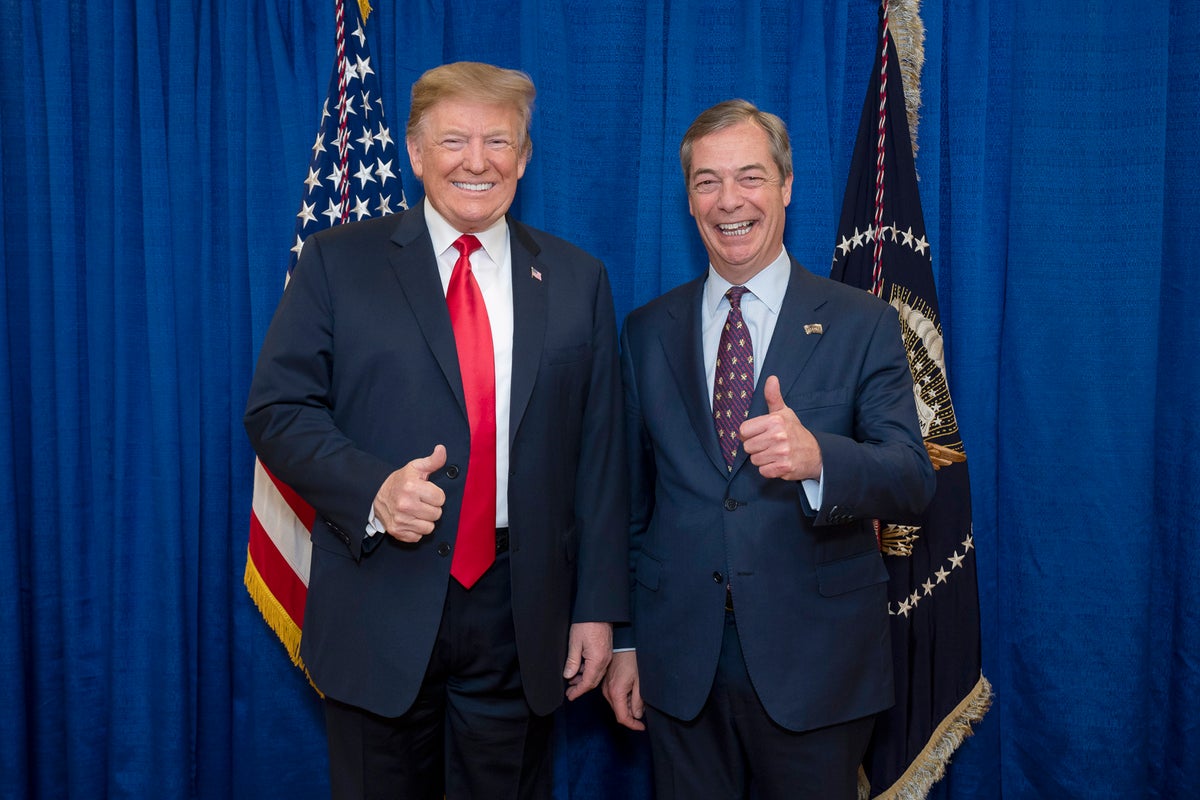
Nigel Farage's Push: How Donald Trump's Opposition Derailed the Chagos Deal
In the intricate world of international diplomacy, agreements that appear solid can crumble under the weight of shifting political alliances and influential voices. Such is the unfolding saga of the Chagos Islands deal, a proposed agreement designed to resolve a long-standing territorial dispute and secure a crucial military base. At the heart of its dramatic derailment lies a fascinating interplay between two highly recognizable conservative figures: Nigel Farage, a relentless British populist, and former U.S. President Donald Trump. Their combined opposition has effectively brought a significant UK foreign policy initiative to a grinding halt, marking a critical moment in Anglo-American relations and regional geopolitics. This article delves into how Donald Trump's opposition to the Chagos deal, significantly fueled by Farage's persistent lobbying, led to its shelving, offering insights into the potent dynamics of personal influence in global affairs.
The Chagos Deal: A Strategic but Contentious Proposal
The Chagos Islands deal, spearheaded by Sir Keir Starmer's government, was envisioned as a diplomatic solution to decades of dispute over the British Indian Ocean Territory (BIOT). The core of the proposal involved the United Kingdom ceding sovereignty of the archipelago to Mauritius, a move aimed at rectifying historical grievances and complying with international legal opinions. In return, the UK would secure a critical 99-year leaseback agreement for the strategically vital military base on Diego Garcia. This facility, operated jointly with the United States, is an indispensable asset for projecting power and maintaining security in the Indian Ocean region, serving as a hub for aerial reconnaissance, naval operations, and logistical support.
Financially, the deal was substantial. The UK had agreed to compensate Mauritius with at least £120 million annually over the 99-year lease period, accumulating to a staggering total of £35 billion in cash terms. For the British government, the deal was framed as a pragmatic necessity to ensure the continued operation of Diego Garcia, bolster relations with a key Commonwealth nation, and uphold international law. Initially, the proposal garnered some crucial support from the U.S., with President Trump himself reportedly telling Sir Keir Starmer during a White House visit that he was “inclined to go with your country” and “a feeling it’s going to work out very well.” This initial backing seemed to pave the way for a smooth ratification process, yet unseen forces were already gathering to challenge its fate.
Nigel Farage's Relentless Campaign Against "Surrender"
From the outset, Nigel Farage emerged as a vociferous opponent of the Chagos deal. The Reform UK leader, known for his unyielding anti-establishment stance and nationalist rhetoric, swiftly dubbed the agreement a “surrender” treaty and an “absolute betrayal” of British interests. He famously described it as “the worst deal in history,” articulating a belief that ceding sovereignty of any British territory was fundamentally wrong, regardless of the leaseback arrangement for Diego Garcia. For Farage, the deal represented a national humiliation, an act of weakness that undermined the UK’s standing on the global stage.
Farage’s strategy was clear and direct: to rally opposition and, crucially, to leverage his unique relationship with Donald Trump. His planned visit to Mar-a-Lago, Trump's Florida estate, was explicitly aimed at “reinforcing the message” against the deal. “President Trump has almost understood the deal, but I will be dining at Mar-a-Lago tomorrow night, and we will reinforce the message,” Farage stated, highlighting his direct line of communication to the former president. His consistent lobbying, coupled with his narrative of the government’s foreign policy being “beaten back,” proved incredibly potent. Farage’s ability to frame the issue in terms of national strength versus perceived weakness resonated deeply with Trump’s own political philosophy, providing a powerful counter-narrative to the deal’s initial proponents. His sustained campaign underscores the significant influence that non-governmental political figures can exert on international agreements, especially when they possess direct access to powerful leaders.
Donald Trump's Dramatic U-Turn: From Backer to Opponent
The pivotal moment in the Chagos saga was Donald Trump's dramatic shift in stance. Despite his earlier expressions of support, Trump executed a sharp U-turn, transforming from an “inclined” backer into a vocal critic. In recent weeks, his condemnation became increasingly strident, describing the agreement as an “act of great stupidity” and “an act of total weakness.” This sudden pivot was not merely a change of heart; it was a clear signal that the deal's crucial American backing was dissolving.
Several factors likely contributed to Trump's change of mind. Farage's persistent and direct lobbying undoubtedly played a significant role, tapping into Trump's transactional view of international relations and his skepticism towards agreements perceived as disadvantageous. Furthermore, Trump's broader dissatisfaction with Sir Keir Starmer’s leadership and the UK’s foreign policy – particularly following a very public fallout over Starmer’s refusal to allow initial US strikes on Iran from British bases – likely deepened his resolve. Trump’s cutting remarks, such as declaring Britain’s response “very disappointing” and stating that “Keir Starmer is not Winston Churchill,” highlighted a growing personal and political rift. This dynamic illustrates how perceived “weakness” or a lack of alignment on other strategic issues can quickly sour a leader's view on unrelated agreements. For a leader like Trump, who often prioritizes perceived strength and “America First” principles, Farage's arguments about “surrender” likely struck a chord, making him receptive to ditching a deal that he might have initially viewed as less consequential. The implications of Donald Trump's U-turn on the Chagos deal were immediate and profound, setting the stage for its eventual shelving.
The Deal Derailed: Legislative Setbacks and Diplomatic Fallout
The impact of Donald Trump’s opposition, galvanized by Nigel Farage, was swiftly felt. Sir Keir Starmer’s government has now effectively shelved the Chagos Islands deal, citing “worsening relations with Donald Trump” and the U.S. failure to formally confirm its approval as key reasons. While UK officials have maintained that they are not entirely abandoning the agreement, the immediate reality is that the legislative window to pass the necessary bill before Parliament’s prorogation has closed. Crucially, a new Chagos bill is not expected to feature in the upcoming King’s Speech in mid-May, signaling a significant delay, if not a complete halt, to the process.
This setback has immediate diplomatic consequences. Mauritius, which had been anticipating the return of sovereignty, has already indicated it is “exploring legal avenues” against the UK over the delay. While the UK government believes there are no grounds in international law for Mauritius to obtain compensation if the treaty is not ratified, the potential for further legal battles adds another layer of complexity. The shelving of the deal underscores the fragility of international agreements, particularly when they lack robust, bipartisan backing and become entangled in the personal politics of influential leaders. It serves as a stark reminder that even meticulously negotiated treaties can be undone by shifts in political sentiment and the assertive lobbying of determined individuals. For UK foreign policy, this episode represents a significant diplomatic setback, highlighting the enduring influence of U.S. leadership and the strategic importance of aligning key initiatives with America's geopolitical outlook. Navigating such challenges requires not only astute diplomacy but also a keen understanding of the shifting sands of global political power.
Conclusion
The Chagos Islands deal, once envisioned as a pragmatic solution to a complex historical and strategic challenge, now lies in limbo, a casualty of the powerful intersection of political influence and personal conviction. Nigel Farage's relentless campaign, coupled with his direct access to Donald Trump, proved to be an irresistible force against an agreement that lacked the deep-seated political consensus needed to withstand external pressures. Trump's dramatic U-turn, transforming from a tentative supporter to a vehement opponent, irrevocably altered the deal's trajectory, demonstrating how the personal opinions of a potential future U.S. leader can directly impact the foreign policy agenda of an ally. This episode offers valuable lessons on the intricacies of international diplomacy, the enduring power of charismatic figures, and the delicate balance required to navigate geopolitical alliances. Ultimately, the story of the Chagos deal's derailment is a testament to the fact that in global politics, the greatest obstacles can sometimes emerge not from national interests, but from the powerful voices shaping them.